How We Built Cinema Studio
"We didn't kill art. We changed who gets the right to make it."
Cinema Studio 是 Higgsfield 的 AI 电影制作工具:界面上摆的不是滑块和形容词,而是摄影机、镜头和焦距。它由一支包含约 200 名电影行业从业者的团队做出来,半年发了五个版本。这篇是他们的第一篇 Inside Higgsfield——从 2025 年 11 月一条袋鼠格斗视频意外爆火讲起,讲到没人能复现它、拆开 prompt 才发现秘密藏在摄影机品牌名里,再讲到 3.0 那次他们自己也不想认的发布,以及十天后翻盘的 3.5。
把摄影师的语言做成界面:一个 AI 电影工具的半年
-
一条袋鼠视频起的头
"I'm scrolling Twitter, where all the creators live, and nobody is generating in 21:9 at all."
He tried it, built a frame in the cinema format and animated it. The picture came out noticeably different, richer and more cinematic.
2025 年 11 月新图像模型发布,Sula 注意到所有人都在生成 3:4 和 4:3。他改成电影比例,午饭前做出的袋鼠格斗片两天破百万播放。
-
复现不了,才是产品的起点
"I tried what I thought was the exact same thing, and what I got was slop."
So the prompt engineers took Sula's prompts apart line by line, and found them unusually heavy with technical terms, not about the scene or the story but about cameras, optics, and light.
秘密藏在真实摄影机和镜头的名字里。产品负责人 Axultan 当时甚至不知道那个反复出现的词是个摄影机品牌。
-
电影语言本来就在模型里
"Sula didn't invent the magic. He found the right way to reach it."
Top models train on enormous volumes of video, decades of cinema included, so the cinematic visual language is already inside them; a prompt naming a specific camera and lens lands more precisely than asking, in ordinary words, for something beautiful.
与其用形容词描述「好看」,不如像摄影师那样选机身、上镜头、定焦距。把这套调用方式做成界面,就是 Cinema Studio。
-
砍掉什么比留下什么难
"Working out what a person genuinely needs takes far longer than listing everything they might want."
Out of everything a cinematographer touches on set – the cameras, optics, light, filters and movement, the first version kept three settings: camera, lens, and focal length.
定夺的人是 Danil Kim——做过摄影指导,进 Higgsfield 之前给真实剧组送器材。镜头不是从目录里挑的,是跑完生成把素材发给摄影机操作员,问一句「这看着像 AI 吗」。
-
每支镜头的性格是手调出来的
"So we looked for each lens's character, and we amplified it."
Early on, nearly every lens looked the same in generation, which is a problem for a product whose entire premise is that the choice of lens matters.
有些名镜因为模型复现不出它的效果被当场砍掉。没有用户会知道镜头是手调的——而这恰恰是他们要的结果。
-
手艺没有焊死在模型上
"The core model underneath changed, and the craft stayed exactly where it was."
Version 3.5 shipped just ten days after 3.0, open to everyone, without a single preset breaking.
3.0 撞上新视频模型发布的行业混战,成了产品史上最颠簸的一次发布。十天翻盘靠的是几个月前攒下、且与模型解耦的镜头资产。
-
门槛从来不是创意,是钱
"We didn't kill art. We changed who gets the right to make it."
Making a film has always meant commanding serious capital, cameras, crews, distribution, and the gatekeeping in cinema was never creative. It was financial.
Axultan 认为「要不要看纯 AI 电影」这个问题活不过这个十年:工具会变得不可见,就像今天没人再问一部片是胶片拍的还是数字拍的。
Inside Higgsfield
Stories about how we build our products, told by the people who create them.
关于我们怎么做出自己的产品的故事,由做它们的人来讲。
Cinema Studio is Higgsfield's AI filmmaking tool: an original interface with cameras, optics, and focal lengths, curated by a former director of photography and built on top of interchangeable video models.
Cinema Studio 是 Higgsfield 的 AI 电影制作工具:一套原创界面,里面有摄影机、光学镜头组和焦距,由一位前摄影指导挑选编排,搭在可替换的视频模型之上。
It was made by a team that includes around 200 people from the film industry.
做它的团队里有大约 200 人来自电影行业。
Five versions shipped in the first six months.
头六个月发布了五个版本。
Here is how it happened, from the inside.
以下是它发生的经过,从内部讲起。
It All Started With a Kangaroo
In November 2025, an image model came out that changed the market.
2025 年 11 月,一个图像模型问世,改变了市场。
Releases like that trigger a standard procedure here: the entire creative team tests the model to understand what it can do and where to apply it.
这样的发布在我们这里会触发一套标准流程:整个创意团队去测这个模型,搞清楚它能做什么、能用在哪儿。
Sula, one of our creatives, was doing exactly that when he noticed that everyone around him was generating in 3:4 and 4:3.
Sula 是我们的创意之一,他当时正在做这件事,然后注意到周围所有人都在用 3:4 和 4:3 生成。
"I'm scrolling Twitter, where all the creators live, and nobody is generating in 21:9 at all," he says, so he tried it, built a frame in the cinema format and animated it.
“我在刷 Twitter,创作者都在那儿,可根本没人用 21:9 生成,”他说。于是他试了试,用电影画幅搭了一个画面,让它动起来。
The picture came out noticeably different, richer and more cinematic, and to see how far it went he started writing the names of real cameras into his prompts.
出来的画面明显不一样,更丰富,也更有电影感;为了看看这条路能走多远,他开始把真实摄影机的名字写进 prompt。
To his surprise, it worked.
让他意外的是,这招真的管用。
By lunchtime there was a finished clip: a kangaroo squaring up for a fight inside an octagon.
到午饭时间,一条成片出来了:一只袋鼠在八角笼里摆开架势准备开打。
It passed a million views in a couple of days.
几天之内,播放量过了一百万。
When the team first saw it, there was no doubt about what to do next.
团队第一次看到它,下一步该做什么没有任何疑问。
This had to become a product, and urgently.
这得做成产品,而且要快。
The only problem was that nobody else could reproduce it.
唯一的问题是,别人谁也复现不出来。
"I tried what I thought was the exact same thing," says Axultan, our product lead, "and what I got was slop." So the prompt engineers took Sula's prompts apart line by line, and found them unusually heavy with technical terms, not about the scene or the story but about cameras, optics, and light.
“我试了我以为一模一样的东西,”我们的产品负责人 Axultan 说,“结果出来的是 slop。”于是 prompt engineer 们把 Sula 的 prompt 逐行拆开,发现里面技术术语密度出奇地高,写的不是场景和故事,而是摄影机、光学镜头组和光线。
One word in particular kept coming up, and Axultan laughs that he didn't even know, at the time, that it was a camera brand.
有一个词反复出现;Axultan 笑着说,他当时压根不知道那是个摄影机品牌。
Top models train on enormous volumes of video, decades of cinema included, so the cinematic visual language is already inside them; a prompt naming a specific camera and lens lands more precisely than asking, in ordinary words, for something beautiful.
顶尖模型是在海量视频上训练的,其中包括几十年的电影,所以电影的视觉语言本来就在它们体内;一条点名具体摄影机和镜头的 prompt,比用大白话讨一个“好看的东西”落得更准。
Sula didn't invent the magic.
Sula 没有发明这套魔法。
He found the right way to reach it.
他找到了抵达它的正确方式。
That is the whole idea behind Cinema Studio.
这就是 Cinema Studio 背后的全部想法。
Instead of describing a look in words, you build the frame the way a cinematographer would, picking a camera, mounting a lens, setting the focal length, with the knowledge that makes those choices work already baked in underneath.
你不再用文字去描述一种观感,而是像摄影师那样搭画面:挑一台摄影机,装上一支镜头,定好焦距,而让这些选择生效的知识,已经内建在底下。
And when it came time to actually build that, we had an advantage most companies don't.
而真要把它造出来的时候,我们有一个大多数公司没有的优势。
The 200 People You Don't See
Film was always part of Higgsfield.
电影一直是 Higgsfield 的一部分。
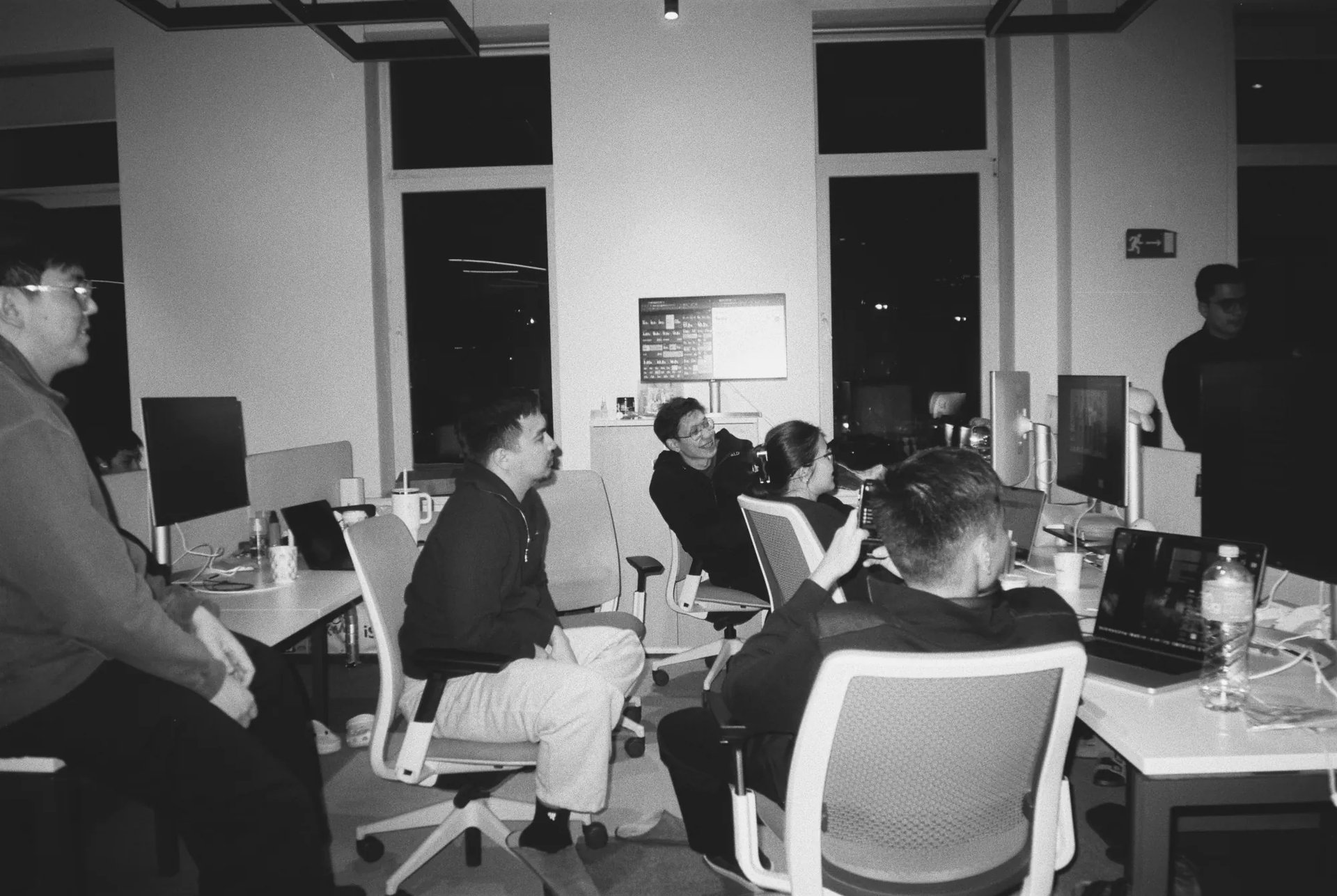
Long before Cinema Studio, we were hiring people from the film industry – directors, cinematographers and editors, and today the creative team is around 200 people.
早在 Cinema Studio 之前,我们就在从电影行业招人——导演、摄影师、剪辑师,如今创意团队大约 200 人。
So the question of how an ordinary person could learn to speak like a cinematographer never went off to research studies and surveys; we worked it out internally, with the people who speak that language every day.
所以,普通人怎样才能学会像摄影师那样说话,这个问题从来没有丢给调研和问卷;我们在内部解决,和每天都在说这门语言的人一起。
Most of that work went into a part of the product no user would ever notice.
这些工作大部分投进了产品里一个用户永远不会注意到的部分。
Out of everything a cinematographer touches on set – the cameras, optics, light, filters and movement, the first version kept three settings: camera, lens, and focal length.
摄影师在片场接触的一切——摄影机、光学镜头组、灯光、滤镜和运动——第一个版本只保留了三项设置:摄影机、镜头、焦距。
Everything else was cut, and deciding what to cut was harder than it sounds, because working out what a person genuinely needs takes far longer than listing everything they might want.
其余全部砍掉,而决定砍掉什么比听上去要难,因为搞清楚一个人真正需要什么,远比列出他可能想要的一切花时间得多。
That job fell to Danil Kim, our creative team lead, who spent years as a director of photography and, before Higgsfield, used to deliver camera equipment to real film sets.
这活落到了 Danil Kim 身上,他是我们的创意团队负责人,做过多年摄影指导,来 Higgsfield 之前还给真实的电影片场送过摄影器材。
He didn't choose the cameras in the pool from a catalog.
他没有照着产品目录挑备选池里的摄影机。
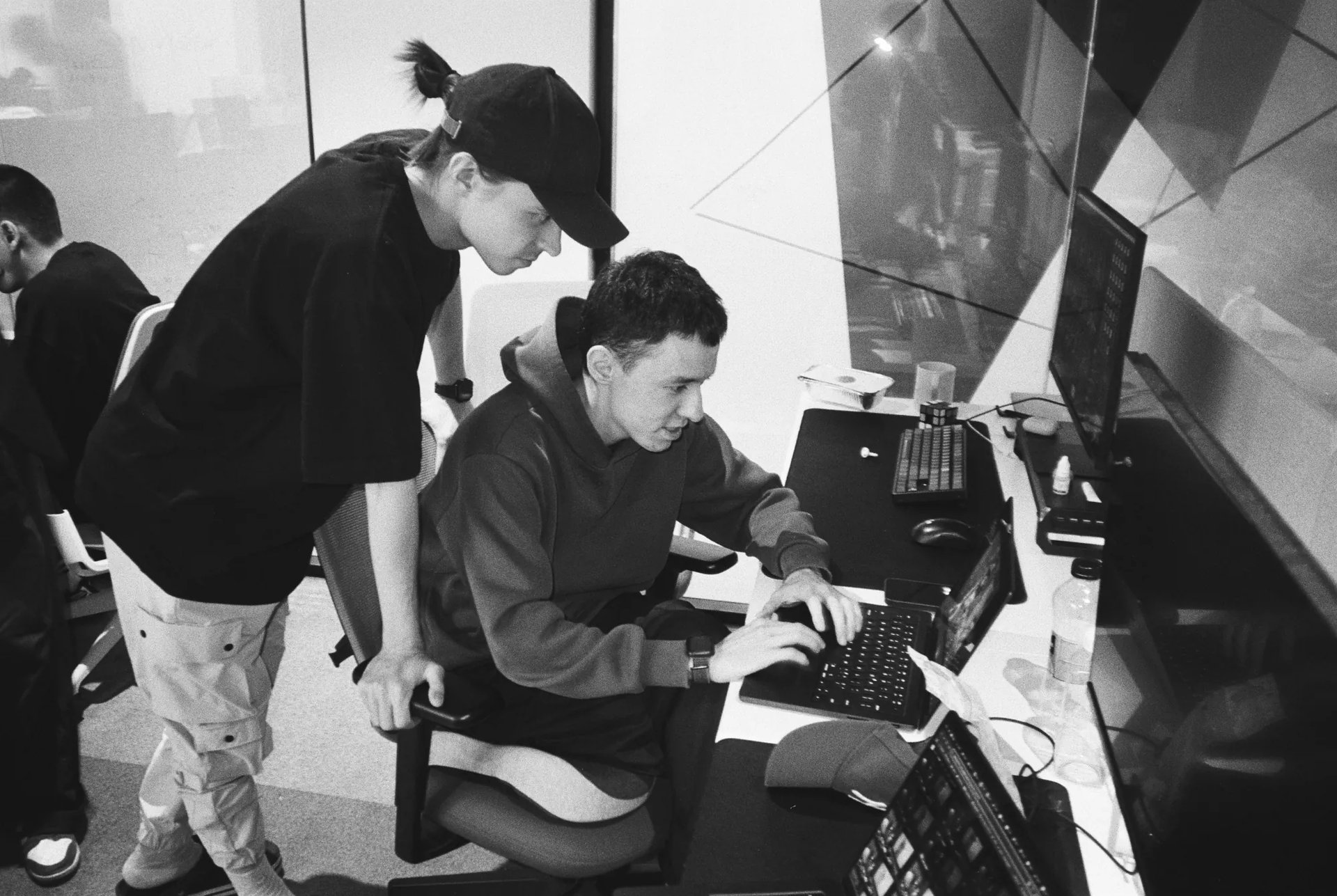
"I didn't trust only myself," Danil says, and the way he worked shows it.
“我没有只相信自己,”Danil 说,他的做法也印证了这一点。
Together with the prompt engineers, he ran combinations of cameras and optics through the model and reviewed the results, then sent the footage to working camera operators he knew and asked them directly: does this look AI to you?
他和 prompt engineer 一起,把摄影机与光学镜头组的各种组合喂给模型跑,逐一审看结果,再把素材发给自己认识的、还在一线干活的摄影机操作员,直接问他们:这在你看来像不像 AI 做的?
Whatever failed that check was out, and some of what failed were legendary lenses whose names carried real weight, dropped the moment the model couldn't reproduce their effect.
过不了这一关的一律出局,其中有些是名字很有分量的传奇镜头——只要模型复现不出它们的效果,就当场拿掉。
Then came the harder part.
接下来是更难的部分。
Early on, nearly every lens looked the same in generation, which is a problem for a product whose entire premise is that the choice of lens matters.
早期,几乎每支镜头在生成结果里看上去都一样,而这款产品的整个前提就是“选哪支镜头很重要”,这就成了问题。
A cinematographer picks a specific lens for a specific feeling, and that feeling wasn't coming through.
摄影师是为某种特定的感觉去挑某一支特定的镜头,而那种感觉当时并没有出来。
So the team went through the lenses one at a time, pulled the character out of each piece of glass, and amplified it, in places exaggerated it, until the difference was visible and choosing one lens over another changed the shot. "Obviously it's not the same as shooting on a real camera and real optics," Danil says. "So we looked for each lens's character, and we amplified it." No one who uses Cinema Studio will ever know that a lens was tuned by hand, and that is exactly the outcome we wanted.
于是团队一支一支地过镜头,把每一片镜片里的性格抽出来放大,有些地方甚至夸张,直到差异肉眼可见,选这支而不是那支,拍出来的镜头就不一样。“显然,这和用真实的摄影机、真实的光学镜头组去拍不是一回事,”Danil 说,“所以我们去找每支镜头的性格,再把它放大。”用 Cinema Studio 的人永远不会知道有一支镜头是手工调出来的,而这正是我们想要的结果。
Around those settings, two more people built the parts you actually touch.
围绕这些设置,另外两个人做出了你真正会去操作的那部分。
Assylzhan, our product designer, put them into a switcher: open the camera picker, roll the wheel, match a lens to the camera and a focal length to the lens.
产品设计师 Assylzhan 把它们放进一个切换器:打开摄影机选择器,滚动滚轮,给摄影机配一支镜头,再给镜头配一个焦距。
It was built to feel like loading a real rig, and it does.
它就是照着装配一套真实机身镜头套组的手感做的,而它确实是这种手感。
Kuanysh, a software engineer, built tracing, so the settings and metadata of a generation are saved and travel with the image; drop that frame in as the start of a video and the whole look carries over.
软件工程师 Kuanysh 做了 tracing:一次生成结果的设置和元数据会被保存下来,随图像一起走;把那一帧放进去当作一段视频的开头,整个观感就会延续下去。
With help from film-industry operators, we then added camera movement and slow motion, defining how the camera should move within each frame.
在电影行业摄影机操作员的帮助下,我们又加入了摄影机运动和慢动作,定义摄影机在每一帧里该怎么动。
That’s how the first version of Cinema Studio shipped on December 18, 2025.
Cinema Studio 的第一个版本就是这样在 2025 年 12 月 18 日上线的。
The Version We'd Take Back
Nobody planned to stop at the first version.
没有人打算止步于第一个版本。
Version 1.5 came quickly, adding aperture as a fourth core control alongside a set of recommended camera presets.
1.5 版很快就来了,把光圈加为第四个核心控制项,同时带来一组推荐的摄影机 preset。
Then, in versions 2 and 2.5, we added Elements, 3D Scene, Character Motions, locations, and Soul Cinema, moving the product from a single strong frame toward whole scenes.
接着在 2 和 2.5 版里,我们加入了 Elements、3D Scene、Character Motions、场景地点,以及 Soul Cinema,把产品从单张有力的画面推向完整的场景。
The rhythm was steady, right up until April, when the market lost its mind.
节奏一直很稳,直到四月,市场彻底疯了。
A new state-of-the-art video model came out, and the entire industry rushed to integrate it at once, everyone wanting the maximum out of it and preferably by yesterday.
一个最先进的新视频模型问世,整个行业一窝蜂抢着接入,人人都想从中榨出最多的东西,最好昨天就要。
Our 3.0 release landed right at the start of that chaos.
我们的 3.0 版本发布,正好赶在这场混乱的开端。
We knew it wouldn't go smoothly, and we decided to ship anyway; and it didn't go smoothly.
我们知道不会顺利,还是决定发;结果确实不顺利。
Given how we rolled it out, 3.0 became the most turbulent release in the product's history, and we didn't like some of those decisions afterward.
以我们推出它的方式,3.0 成了这款产品历史上最动荡的一次版本发布,事后我们自己也不喜欢当中的一些决定。
Once we saw how 3.0 had landed, we did not spend much time trying to defend it; the team went back to work and started building a better version.
看清 3.0 落地的结果之后,我们没有花太多时间为它辩护;团队回到工作里,开始做一个更好的版本。
The only real answer to a rough release, though, is a better version, and the reason we could build one fast is the work we had banked months earlier.
不过,对一次糟糕的版本发布,唯一真正的回答就是一个更好的版本;而我们能快速做出来,靠的是几个月前就攒下的工作。
The cameras, the lenses, the character of the glass, everything Danil had pulled out of generations, none of it was welded to a particular model.
那些摄影机、那些镜头、镜片的性格,Danil 从一次次生成结果里抽出来的一切,没有一样焊死在某个特定模型上。
The core model underneath changed, and the craft stayed exactly where it was, which is why version 3.5 shipped just ten days after 3.0, open to everyone, without a single preset breaking.
底下的核心模型换了,这门手艺原封不动地留在原处——这就是为什么 3.5 版在 3.0 之后仅仅十天就发布,面向所有人开放,没有一个 preset 出问题。
Those ten days meant 3 a.m. syncs with the team and coffee at ten, though that was not far from an ordinary week for us.
那十天意味着凌晨 3 点和团队开同步会、十点的咖啡,不过这跟我们平常的一周也差不了多少。
It was simply the work.
这不过就是工作而已。
From a Frame to a Film
Version 3.5 gathered everything the team had learned in those months, and almost every change in it grew out of a single fact: the new model could generate long scenes made of several shots.
3.5 版本汇集了团队这几个月学到的一切,而其中几乎每一项改动都源于同一个事实:新模型能生成由多个镜头组成的长场景。
In a multishot like that, one continuous camera movement no longer covered anything, so camera control had to move up a level; now you choose a genre, and the camera moves the way that genre moves, cutting like action or holding like drama.
在这样的多镜头里,单一的连续运镜已经罩不住整场戏了,所以摄影机控制必须往上抬一层;现在你选一种类型片,摄影机就按那种类型片的方式运动,该像动作片那样剪就剪,该像剧情片那样定住就定住。
The same fact produced video-first generation, because if the model can carry a full scene, there is no reason to make a still and then animate it.
同一个事实也带来了 video-first 的生成方式:模型既然能撑起一整场戏,就没有理由先做一张静帧、再让它动起来。
You set the camera, lens, focal length, and aperture, and shoot straight to video.
你设定摄影机、镜头、焦距和光圈,直接拍成视频。
The person behind much of this is Sabatovsky, an R&D prompt engineer who thinks about the product through the person using it.
这背后大半的工作出自 Sabatovsky,一位 R&D prompt engineer,他想产品的方式,是从用产品的那个人出发。
People come in with prompts that are three words long or physically impossible; his favorite is "generate me a 50-shot battle scene in 15 seconds." The enhancer he builds exists for one outcome: "You come in, you don't strain yourself much, and you get something delicious on the first batch.
人们进来写的 prompt 只有三个词,或者物理上根本不可能实现;他最爱举的一条是“给我生成一个 15 秒的 50 镜头战斗场面”。他做的 enhancer 只为一个结果存在:“你进来,不用太费劲,第一批就出好东西。
Fourth at worst." Without it, a user burns credits iterating blindly.
最差也就到第四批。”没有它,用户只能盲目迭代,白白烧掉 credits。
That philosophy grew, in 3.5, from a frame to a whole film, which is how projects appeared.
这套理念在 3.5 里从一个画面长成了一整部片子,projects 就是这么出现的。
They work the way a shoot does, where a cinematographer settles on an equipment package before production and carries it through the film; start a project, a 90s action movie or a western, and the light, optics, and tempo hold across every generation inside it, so the style is chosen once.
它们的运作方式跟一次实拍一样:摄影师在开机前定下一套器材包,再把它贯穿整部片子;开一个 project,一部 90 年代动作片,或者一部西部片,光线、光学和节奏就在这个 project 内的每一次生成里保持一致,风格只选一次。
The one thing we didn't remove was the old versions.
唯一没被我们拿掉的,是旧版本。
The plan had been to retire them as new ones shipped, but users asked to keep generating on 2.5, and that request, brought in by Gani, who leads our Discord community, is why version selection lives inside the tool today.
原本的计划是新版本一上线就让旧版本退役,但用户要求继续在 2.5 上生成,而这个请求——由带领我们 Discord 社区的 Gani 带回来——正是今天版本选择依然留在工具里的原因。
Somewhere in that release, Cinema Studio stopped being a generator of nice frames and became a system for making films, with work created through it now featured in Higgsfield Originals.
在那次发布的某个节点上,Cinema Studio 不再是一个生成漂亮画面的生成器,而成了一套做电影的系统,用它做出来的作品如今出现在 Higgsfield Originals 里。
What We're Actually Betting On
As Cinema Studio evolved, the question changed to “What kind of cinema could people make with it?”
随着 Cinema Studio 的演进,问题变成了“人们能用它做出什么样的电影?”
Ask Axultan which director he'd want on the next version, and the person who nine months earlier didn't recognize a camera brand answers without a pause: Nolan. "I think we approach creation in a similar way." Then he adds Damien Chazelle: "He makes very alive films.
问 Axultan 希望哪位导演参与下一个版本,这个九个月前还认不出摄影机品牌的人毫不迟疑:Nolan。“我觉得我们对待创作的方式很像。”然后他又加上 Damien Chazelle:“他拍的片子非常活。
Useful experience for us, how to make the living out of the lifeless," he laughs.
这对我们是很有用的经验,怎么从没有生命的东西里做出活的东西,”他笑着说。
On the question that hangs over the whole industry, whether we've built a tool that kills art, his answer has been ready a while.
至于那个悬在整个行业头上的问题——我们是不是造了一个杀死艺术的工具——他的答案早就备好了。
"We didn't kill art.
“我们没有杀死艺术。
We changed who gets the right to make it.
我们改变的是谁有权做艺术。
Making a film has always meant commanding serious capital, cameras, crews, distribution, and the gatekeeping in cinema was never creative.
拍一部电影,一直意味着要调动大笔资本、摄影机、剧组和发行,而电影里的守门从来不是创意。
It was financial." Models and compute cost money too, he grants, but the gap between a studio and one person shrinks every year, and asked whether we'll one day watch only AI films, he thinks the question won't survive the decade. "The tools become invisible.
是钱。”模型和算力同样要花钱,他承认,但工作室和一个人之间的差距每年都在缩小;问他有一天我们是不是只看 AI 电影,他觉得这个问题撑不过这个十年。“工具会变得不可见。
We stop noticing where the AI was, the way we stopped noticing whether something was shot on film or digital.
我们会不再注意 AI 出现在哪里,就像我们已经不再注意一个东西是胶片拍的还是数字拍的。
Every time the cost of creation drops, there is more art, not less.
每一次创作成本下降,艺术都变多,而不是变少。
There'll be a huge wave.
会有很大的一波。
Most of it forgotten.
其中大部分会被遗忘。
The best of it made by people we haven't heard of yet."
最好的那些,出自我们至今没听说过的人。”
Nobody on the team thinks everyone is about to become a director.
团队里没人认为所有人都要变成导演。
The bet is quieter: one person, with taste and patience and a tool that speaks the language of cinema, makes a genuinely good film start to finish.
他们赌的是更安静的一件事:一个人,有品味、有耐心,再加一个会说电影语言的工具,从头到尾做出一部真正好的片子。
With every version, Cinema Studio has brought that possibility closer, moving from a kangaroo generated at five in the morning to a complete filmmaking system.
每出一个版本,Cinema Studio 都把这种可能又推近一点——从凌晨五点生成的一只袋鼠,走到一套完整的电影制作系统。
Closing that gap also meant taking more of the technical work off the filmmaker.
缩小这个差距,也意味着把更多技术活从创作者身上拿走。
AI Director, introduced in 3.5, began doing exactly that.
3.5 里引入的 AI Director,做的正是这件事。
It eventually outgrew Cinema Studio and became a separate product: Supercomputer.
它最终长过了 Cinema Studio,成了一个独立产品:Supercomputer。
And that is the next Inside Higgsfield story.
而那就是下一篇 Inside Higgsfield 的故事。